
Custom wood box packaging can turn a product into a complete brand experience. For wine producers, gift brands, and premium product companies, a wooden box does more than protect the item inside. It creates a stronger first impression, supports brand storytelling, and gives customers a package they may keep and reuse.
However, a successful custom box project requires more than choosing a wood species and adding a logo. The box must fit the product, match the intended market, protect the contents during transport, and remain practical for production and shipping. This wood box packaging guide explains the main decisions that wine and gift brands should make before requesting a quotation or approving a sample.
Wood Box Packaging: Start with the Product and Customer Experience
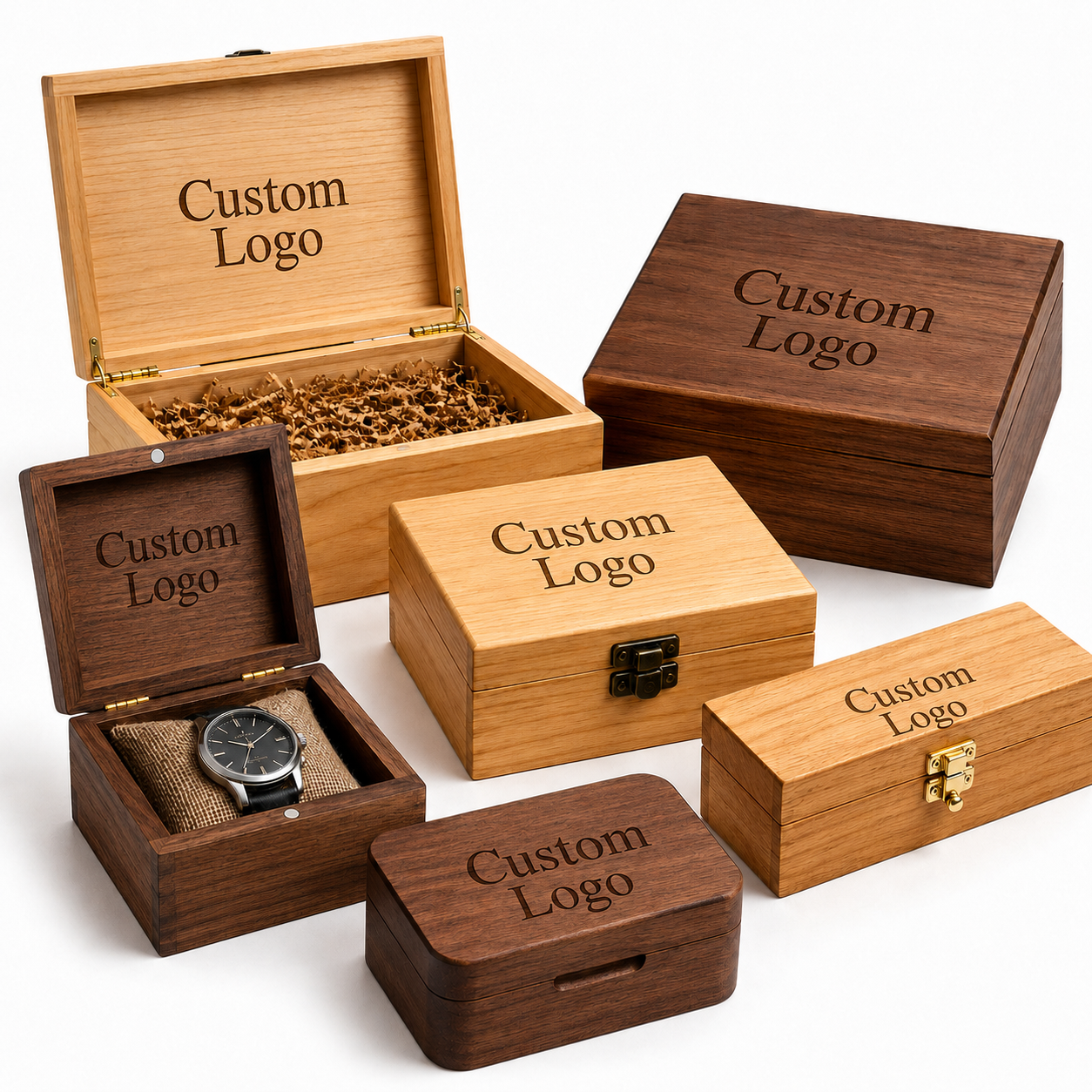
The first step is to define what the box needs to hold and how the customer will use it. A single-bottle wine box has different structural requirements from a jewelry box, perfume case, food gift box, or multi-item corporate gift set.
Prepare the following information:
- Product name and application
- Number of items in each box
- Product dimensions and weight
- Required internal clearance
- Whether the box will be opened once or reused
- Retail, gifting, event, or promotional use
- Target market and expected price position
For example, a winery may need a single-bottle carrier with a sliding lid, rope handle, or custom insert. A gift brand may need a hinged case with a tray, compartments, or a soft lining. Defining the use case early helps the manufacturer recommend a suitable structure instead of adapting a standard box that does not fully fit the product.
2. Choose the wood material and construction
Wood selection affects appearance, weight, cost, machining, and shipping performance. Common options may include paulownia, pine, plywood, MDF with a wood finish, or other materials selected according to the project requirements.
Lightweight wood can help reduce shipping weight, while denser wood may create a heavier and more substantial presentation. The right choice depends on the product, the desired visual effect, the required strength, and the target budget.
You should also confirm the construction method. Possible structures include:
- Sliding-lid boxes
- Hinged-lid boxes
- Lift-off-lid boxes
- Folding wooden cases
- Bottle carriers with handles
- Boxes with internal trays or dividers
Ask for a material sample or prototype before bulk production. The sample allows you to evaluate the grain, surface, joint quality, lid movement, and overall fit.
3. Confirm the internal dimensions and insert
The external appearance of a box is important, but the internal configuration determines whether the packaging works in practice. Provide accurate product measurements and include any accessories, bottles, jars, cards, or protective components that will be packed inside.
Depending on the application, the insert may be made from wood, paperboard, foam, velvet, fabric, wood wool, or another material. The insert should hold the product securely without making the box difficult to open.
For wine packaging, check bottle diameter, bottle height, neck clearance, and the position of the insert. For gift packaging, consider how multiple products will be arranged and whether the customer should see all items immediately after opening the lid.
A technical drawing or approved sample is strongly recommended. It reduces the risk of fit problems and makes it easier for the buyer and manufacturer to confirm the same specification.
4. Select the finish and color
The finish changes the perceived value of custom wood box packaging. A natural finish can emphasize the wood grain and communicate a more rustic or eco-conscious style. A stained, painted, or coated finish can match a brand color system and create a more consistent retail presentation.
Possible finish directions include:
- Natural wood appearance
- Clear protective coating
- Custom stain
- Painted color
- Vintage or distressed effect
- Burnt or engraved surface effect
- Matte or higher-gloss appearance
The final result can vary depending on the wood species, grain, coating, and production process. Always approve a physical sample or a clearly specified finish reference before placing a bulk order. If color consistency is important, provide a brand color reference and confirm how the color will be evaluated on the selected wood surface.
5. Choose the right branding method
A wooden box provides several ways to present a logo or message. The best method depends on the brand identity, artwork, surface, quantity, and desired appearance.
Common options include:
- Laser engraving for a natural and permanent look
- Hot stamping for a metallic or premium effect
- Screen printing for selected colors and graphic layouts
- Printed labels or plaques for detailed artwork
- Embossed or applied logo elements where suitable
Send vector artwork whenever possible and specify the logo size, placement, color, and orientation. If the box includes a lid, handle, or multiple panels, confirm which surface will carry the main branding. A logo that looks balanced on a flat sample may appear different when placed on a curved, framed, or textured area.
6. Design for international shipping
A beautiful package must also arrive in good condition. Discuss the outer carton, protective materials, palletization, moisture protection, and labeling requirements before production. For additional international packaging considerations, review international shipping packaging best practices.
For international orders, confirm:
- Individual box protection inside the export carton
- Carton quantity and gross weight
- Carton dimensions for freight planning
- Protection against abrasion and impact
- Shipping marks and required labels
- Documentation required by the destination market
Wine and gift brands should also consider the total shipping cost. Box weight, carton volume, and stacking efficiency can affect the landed cost of the product. A packaging design that looks premium but uses unnecessary material may be difficult to scale profitably.
7. Request a sample before bulk production
A sample is one of the most important stages in a custom packaging project. It gives the buyer a chance to confirm dimensions, opening method, insert fit, finish, logo placement, and perceived quality.
Before approving the sample, check:
- Does the product fit without excessive movement?
- Does the lid open and close smoothly?
- Are the hinges, fasteners, handles, and other hardware aligned?
- Is the surface finish consistent with the approved reference?
- Is the logo clear and correctly positioned?
- Does the insert protect the product during handling?
- Does the finished box match the intended brand position?
Record any changes in a final specification or approval document. This helps both sides work from the same reference during bulk production.
8. Prepare a complete quotation brief
A complete quotation request helps the manufacturer respond accurately. Include the target quantity, box dimensions, material preference, finish, branding method, insert requirements, packaging, destination market, and desired delivery schedule.
If some specifications are not final, label them as items to be confirmed. Do not assume that a product shown in a reference image automatically includes every insert, accessory, or decoration visible in that image.
For a custom wood box packaging project, the final quotation should clearly separate confirmed specifications from options and pending decisions. This makes price comparisons more meaningful and reduces the chance of misunderstandings before production.
Wood Box Packaging Checklist
Before approving custom wood box packaging, confirm the product dimensions, internal insert, material, finish, branding method, shipping protection, sample approval, and quotation details.
Conclusion
Custom wood box packaging works best when design, protection, branding, and production requirements are considered together. Wine and gift brands should begin with the product dimensions and customer experience, then confirm the material, structure, insert, finish, branding method, shipping protection, and sample approval process.
Landy provides wooden box products and OEM/ODM support for businesses developing custom packaging and gift presentation projects. To discuss a project, prepare your product dimensions, target quantity, preferred finish, logo artwork, and internal packaging requirements before requesting a specification review.
Suggested call to action: Need custom wood box packaging for your wine or gift brand? Contact Landy with your product dimensions, target quantity, and branding requirements to start a packaging discussion.