
Quick Answer: Choose custom wooden packaging by confirming product fit, structure, material, finish, insert, branding, sample, and shipping protection before requesting a quotation. Jewelry, perfume, and collectibles shown in images are application examples only and are not automatically included.
Custom wooden packaging is often considered when a brand wants its product presentation to feel more distinctive than standard packaging. Jewelry, perfume, gifts and collectibles may all require a box that matches the product size, brand style and sales channel.
A successful project does not begin with a decorative finish alone. It begins with a clear packaging brief. Before contacting a wooden packaging supplier, buyers should define what the box needs to hold, how it will be used and which details are essential for the final customer experience.
In practice, buyers can use the following steps as a clear review sequence. First, confirm the product and box fit. Next, review the insert, branding, sample, and transport protection. Finally, record each decision in the quotation or approved drawing so the supplier and buyer use the same specification.
1. Start with the product inside custom wooden packaging
The product determines the packaging requirements. A jewelry item may need a compact insert, while a perfume bottle may require a shaped interior or additional space around the bottle. A collectible may need a different presentation angle or a larger cavity.
Prepare the product dimensions, weight, orientation and any components that must be packed together. If the final product is still being developed, provide the current drawing and identify which measurements may change.
Do not assume that a box shown in a reference image will fit your product. The external appearance and interior capacity must be confirmed separately.
2. Choose the box structure for the intended experience
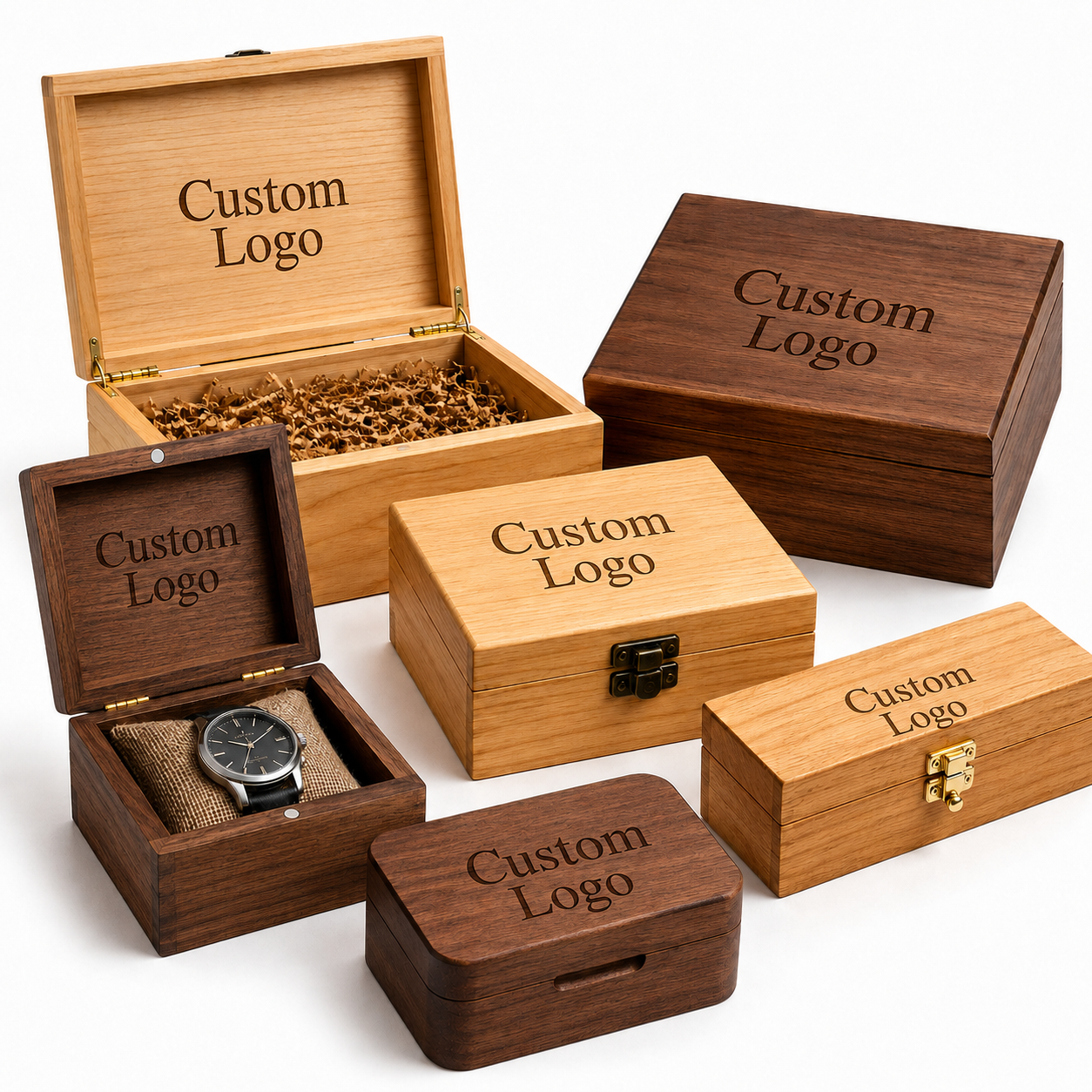
Wooden packaging can be developed in different formats, including hinged gift cases, presentation boxes, storage boxes and boxes with removable or fixed inserts. The right structure depends on how the customer will open, display and store the product.
A hinged case may suit a reveal-style presentation. A removable insert may make the package easier to adapt across product variations. A simpler box structure may be more appropriate when the main goal is a clean branded presentation.
Ask the supplier to confirm the lid construction, hinge arrangement, fastener details and opening method for the selected model. These details should be documented in the product drawing or sample review rather than assumed from a product photograph.
For examples of available wooden box formats, review the Wooden Box category.
3. Confirm the material and finish
Wood species and finish affect the appearance of the packaging. If walnut wood is required, specify it in the brief and ask the supplier to confirm the applicable wood grade, source information and finish reference.
A clear varnish, stained finish, painted surface or other treatment can create different visual results. Natural grain variation should also be discussed when the project requires consistency across a collection.
Avoid describing a finish as sustainable, non-toxic, food-safe or environmentally certified unless the supplier can provide supporting documentation for that exact product and finish.
4. Plan the interior insert carefully
The insert is one of the most important parts of packaging design because it controls product position and presentation. Depending on the project, the interior may use a tray, divider, pad, fitted support or another configuration.
Define the following points before sampling:
- What product or products the insert must hold
- Whether the insert is removable or fixed
- Required clearance around the product
- Whether accessories or information cards are packed inside
- Desired interior material, color and finish
- Whether one box must support more than one product variation
If product images show several interior layouts, treat them as configuration references until the selected SKU and included components are confirmed.
For jewelry-specific presentation options, see the Wooden Jewelry Box category.
5. Build the branding brief
Custom packaging is more effective when the branding requirements are specific. Include the logo artwork, preferred position, approximate size, color direction and proposed application method.
Depending on the project, buyers may review engraving, printing, label application or other branding methods with the supplier. The final method, artwork format and production limitations must be confirmed before approval.
A clear brief also helps the supplier distinguish between the box body, hardware, insert and outer packaging. This reduces the risk of treating a visual reference as a complete production specification.
6. Match the packaging to the sales channel
Packaging for a boutique retail product may have different requirements from packaging prepared for wholesale shipment. Consider where the customer will first see the box, how it will be displayed and how it will be transported.
Discuss individual packaging, protective materials, outer cartons, carton marks and shipping protection as separate items. A presentation box can look attractive while still requiring additional protection for transportation.
Final packaging details should be confirmed for the selected dimensions and order quantity. Do not infer carton quantity, shipping performance or export suitability from a single image.
7. Ask for a sample or approved drawing
A sample gives buyers an opportunity to check the material appearance, opening structure, hardware, insert fit and branding position. An approved technical drawing can also clarify the dimensions and configuration before production.
A useful review checklist includes:
- External and internal dimensions
- Product fit and clearance
- Lid alignment and hinge movement
- Fastener position and operation
- Insert placement and removal
- Surface finish and visible grain
- Logo position and appearance
- Individual and master packaging
The sample or drawing should represent the configuration that will be quoted. If several models are shown in reference images, identify the exact model before approving the next step.
8. Prepare the commercial enquiry
A supplier can respond more accurately when the enquiry includes the target quantity, desired dimensions, material, finish, interior requirements, logo needs and packaging expectations.
For a wholesale project, confirm the minimum order quantity, sample policy, price basis, production lead time, packaging, shipping terms and payment terms. These details can vary according to the selected configuration and should not be copied from another product.
If some information is not ready, label it as to be confirmed. Clear uncertainty is more useful than an inaccurate specification.
9. Use clear language on the product page
A product page should distinguish confirmed product facts from options that require a quotation. It should state the material, visible structure, intended application, customization direction and enquiry process without making unsupported claims.
For example, a page may explain that a wooden packaging box is available for custom projects while stating that dimensions, insert configuration, price and lead time require confirmation. This gives commercial buyers a clear next step without creating an inaccurate promise.
The same principle applies to application images. Jewelry, perfume or collectibles shown in a reference image should be identified as examples unless they are part of the product offer.
10. Use a practical custom wooden packaging checklist
A concise supplier brief can include:
- Product name and intended use
- Product dimensions and weight
- Material and finish reference
- Lid, hinge and fastener requirements
- Insert or tray requirements
- Logo and branding instructions
- Individual and export packaging needs
- Target quantity and required timeline
- Sample and approval requirements
- Questions requiring confirmation
This format makes it easier to compare quotations and identify missing information before a project moves into production.
Conclusion: confirm the complete packaging brief
Choosing custom wooden packaging for jewelry, perfume and collectibles requires more than selecting an attractive box image. Buyers should confirm product fit, structure, material, finish, inserts, branding, sampling, packaging and commercial terms before approving the final specification.
A well-prepared brief helps a wooden packaging supplier understand the project and gives the buyer a clearer basis for quotation and sample review. If you are developing a custom wooden gift case or presentation box, send the product dimensions, target quantity and interior requirements for a specification discussion.
CTA: Request a Custom Wooden Packaging Review
FAQ: Custom Wooden Packaging Questions
What products can use custom wooden packaging?
Custom wooden packaging may be evaluated for jewelry, perfume, gifts, collectibles and other products after the box dimensions, interior configuration and intended use are confirmed. The final suitability depends on the selected design and product fit.
What information should I send to a wooden packaging supplier?
Send the product dimensions, weight, quantity, material preference, finish, insert requirements, branding brief, packaging needs and desired timeline. Mark any unfinished information as to be confirmed.
Can a wooden packaging box be customized?
Customization may include dimensions, finish, branding, hardware, inserts or packaging, depending on the selected product and supplier capability. Confirm the available scope for the specific project before making a promise to a customer.
Should I request a sample before a bulk order?
A sample or approved technical drawing is recommended when fit, appearance, hardware, insert placement or branding is important. Review the configuration that will actually be quoted.
Are the products shown in packaging images included?
Not necessarily. Jewelry, perfume, collectibles and other displayed products may be visual application examples only. Confirm the exact contents of the selected packaging configuration.
For a general overview of packaging as the protection and presentation of products, see this packaging reference.