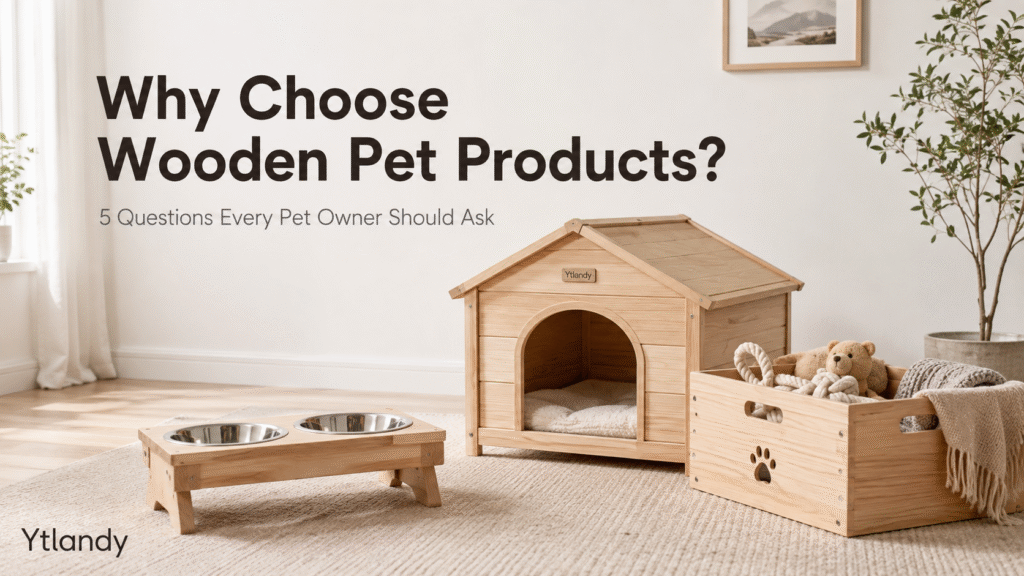
Why Choose Wooden Pet Products? 5 Questions Every Pet Owner Should Ask
Your pet’s health and comfort are influenced by the products you bring into your home. From feeding stations and raised bowls to pet beds, storage boxes, and small pet furniture, more pet owners and pet brands are exploring alternatives to conventional plastic products.
Among these options, wooden pet products stand out for their natural appearance, durability, customization possibilities, and long service life. However, not every wooden product is made to the same standard. The type of wood, surface finish, construction, moisture control, and hardware can all affect the final quality.
So, are wooden products really a better choice for pets? Here are five important questions to consider before buying or sourcing them.
Wooden Pet Products
Q1: Are Wooden Pet Products Safe for Pets?
Yes — when the right materials, finishes, and manufacturing processes are used.
Natural wood can be an excellent material for pet products because it provides a strong and stable structure without relying entirely on plastic. However, buyers should look beyond the wood itself.
The surface of the product should be smooth, with carefully sanded edges and corners to reduce the risk of splinters or sharp points. Paints, stains, lacquers, adhesives, and other coatings should also be selected according to the intended use of the product.
For products that may come into frequent contact with pets, responsible buyers should ask suppliers about:
Wood species and material specifications
Surface coating and finishing options
Adhesives used during assembly
Edge and corner treatment
Moisture content of the wood
Available product testing or compliance documentation
A well-made wooden pet product should feel solid, smooth, and stable while being easy for the owner to use and maintain.
Q2: Why Is Wood Better Than Plastic for Pet Products?
Wood and plastic both have suitable applications, but wooden pet products offer several advantages for brands looking for durable and visually distinctive products.
Durability: Properly constructed wooden products can withstand daily use, movement, scratching, and weight better than many lightweight plastic alternatives.
Stability: Wood provides a solid structure, which is particularly useful for raised feeding stations, pet steps, beds, storage furniture, and pet houses.
Natural appearance: The grain and texture of wood create a warmer, more premium appearance that fits naturally into modern home interiors.
Customization: Wooden products can be produced in different sizes, shapes, colors, finishes, and structures. Logos can also be added through laser engraving, printing, or other branding methods.
Sustainability options: Buyers can choose responsibly sourced wood when sustainability is an important part of their brand positioning.
For more information, ideas, and updates about pets and wooden products, buyers can visit ourFacebook page.
Q3: Which Wood Species Are Best for Pet Products?
There is no single wood species that is suitable for every product. The best material depends on the structure, target price, appearance, weight, and intended application.
Pine is commonly used because it is relatively lightweight, easy to process, and suitable for many customized wooden products.
Paulownia is another lightweight option. It can be useful when reducing the overall product weight is important.
Bamboo-based materials are often selected for products where a clean, modern appearance and good structural strength are required.
Other wood materials can also be considered depending on the customer’s design and target market.
Wood species alone, however, does not determine quality. Moisture control is equally important. Properly controlled and seasoned wood helps reduce problems such as warping, cracking, or dimensional changes during storage and use.
For wholesale buyers, it is therefore important to discuss not only the wood species but also material thickness, moisture requirements, construction methods, finishing, and packaging with the supplier before production.
Q4: How Long Do Wooden Pet Products Last?
The service life of wooden pet products depends on the material, construction, environment, and how the product is maintained.
A properly constructed raised feeding station, pet bed, pet house, or storage box can provide long-term use when it is kept in an appropriate environment.
Several factors affect durability:
Quality and thickness of the wood
Joint and structural design
Moisture control
Surface finishing
Hardware quality
Indoor or outdoor use
Daily cleaning and maintenance
For example, a wooden product designed for indoor use may require a different coating and construction method from a product designed for gardens or outdoor pet areas.
This is why professional product development should begin with the intended application rather than simply choosing a material from a catalogue.
Q5: Can Wooden Pet Products Be Customized?
Absolutely. Customization is one of the biggest advantages of wooden products, especially for pet brands, wholesalers, retailers, and importers developing their own product lines.
At Ytlandy, we provide OEM/ODM solutions for customized wooden products based on customers’ specifications, samples, drawings, or product ideas.
Customization options can include:
Product dimensions
Wood species
Product structure
Wood thickness
Natural or painted finishes
Custom colors
Laser engraved logos
Printed branding
Hardware and accessories
Inner packaging
Retail packaging
Shipping carton requirements
For example, a standard wooden feeding station can be developed into different sizes for different dog breeds, while a wooden pet storage box can be customized with a brand logo, specific finish, handles, hinges, or packaging.
For B2B buyers, this flexibility makes wooden pet products particularly suitable for private-label collections and differentiated product ranges.
What Should Buyers Ask Before Placing a Bulk Order?
If you are sourcing wooden pet products for your business, price should not be the only consideration.
Before confirming an order, ask the supplier about material specifications, sample approval, surface finishing, quality inspection, packaging, logo methods, production lead time, and available certifications or testing.
It is also helpful to request a pre-production sample when developing a new customized design. This gives both the buyer and supplier an opportunity to confirm dimensions, construction, color, branding, and packaging before bulk production begins.
Clear specifications at the beginning of a project can significantly reduce misunderstandings later in the production process.
Conclusion: Are Wooden Pet Products the Right Choice?
For pet brands and owners looking for products that combine function, durability, natural appearance, and customization, wood can be an excellent material choice.
The key is not simply choosing “wood” instead of plastic. Buyers should pay attention to the wood species, moisture control, surface treatment, structure, hardware, and overall workmanship.
Well-designed wooden pet products can become functional parts of the home while also offering brands more opportunities for customized designs and private-label development.
If you are developing a wooden pet product collection, Ytlandy can support custom sizes, materials, finishes, logos, packaging, and OEM/ODM requirements based on your project.
Ready to add quality wooden pet products to your home or store? Browse our wooden products, or contact Yantai Landy today: WhatsApp +86 15166867527 or email crystal@ytlandy.com. We would love to help you find the perfect fit for your furry friend.