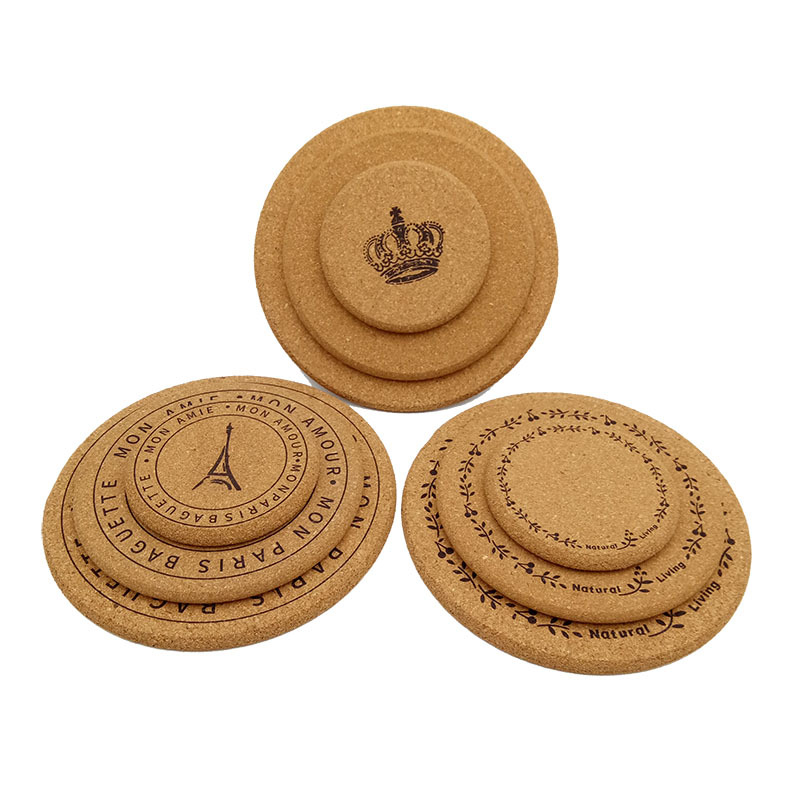
A Tiny Slice of the Forest on Your Coffee Table—Softwood Coaster
Coasters are changing that habit by turning a mundane protective pad into a tactile piece of nature we actually want to display.Remember the last time you set a frosty glass of lemonade on your grandmother’s pine sideboard and watched the condensation race toward the edge? That heart-sinking moment is exactly why coasters were invented—yet most of us still reach for a napkin instead.
Unlike their slate, marble, or ceramic cousins, softwood coasters bring an unexpected warmth to the ritual of setting down a drink. They whisper rather than clink, absorb instead of repel, and age with the same graceful patina as the pine beams in a century-old farmhouse. In a world increasingly dominated by glass and metal, the gentle give of real wood feels almost radical.
Why “Soft” Doesn’t Mean Fragile
The word “softwood” is a botanical label, not a quality judgment. Pine, fir, cedar, and spruce are classified as softwoods because they come from coniferous trees—yet many are harder than so-called hardwoods like basswood or aspen. Kiln-dried pine, the gold standard for premium coaster sets, strikes the sweet spot: tight, uniform grain that resists cracking, but still porous enough to guzzle condensation like a sponge.
During kiln-drying, the moisture content is lowered to 6–8 % (compared with 30 % in fresh-cut lumber). This stabilizes the cells so the coaster won’t cup or split when your steaming French press sits on it. The result is a lightweight disc that can handle a 220 °C teapot yet only weighs half as much as a marble slab—no chipped glass rims or stubbed toes.
The Absorbency Secret Nobody Talks About
Spill a drop of water on an untreated pine board and it disappears in seconds; spill red wine and you’ve got a pink tattoo. That’s why high-end softwood coasters are finished with a food-safe, matte blend of natural oils and micro-porous wax. The finish coats only the walls of the wood fibers, leaving the hollow cells free to wick away moisture. A single 4-inch coaster can lock up 2 ml of water—roughly the condensation from a 12-oz can—before the surface even feels damp. When the room’s relative humidity drops, the trapped moisture migrates back into the air, recharging the coaster for the next round.
From Sawmill to Sandbox: The Eco Math
A standard pine log 8 inches in diameter yields about 40 coaster blanks. The same log, turned into paper pulp, would make roughly 400 disposable napkins. Use each coaster 100 times (a conservative estimate) and you’ve just diverted 40,000 single-use papers from the waste stream—enough to circle your coffee table 200 times. Add the carbon math: pine trees sequester roughly 1 ton of CO₂ per cubic meter of wood; your six-coaster set locks up the equivalent of a 5-mile car trip. Suddenly that drink accessory feels less like a luxury and more like a down-payment on the planet.
Design Trends: Bark On, Engravings, and the New Minimalism
- Bark-Edge Coasters – Leaving the live edge intact celebrates the tree’s silhouette; each rim is unique as a fingerprint.
- Laser-Engraved Forest Motifs – Tiny topographic maps, mountain ranges, or your GPS coordinates of a favorite trail turn the coaster into a pocket-sized memory.
- Negative-Space Shapes – Instead of a perfect circle, designers are routing slim crescents or geometric cut-outs that double as thumb slots for easy lift-off.
- Scandi Monochrome – A matte white oil wash over pale pine gives the minimalist Instagram crowd their neutral palette without plastic.
DIY vs. Artisan: Should You Grab the Scroll Saw?
If you’ve got a miter saw, 220-grit sandpaper, and a lazy Saturday, you can whip up a stack of coasters from that leftover 2×4. Seal them with food-grade mineral oil and you’re done—for about $6 total. What you won’t get is the micro-beveled edge that prevents fraying, the cork backer laser-cut to 0.1 mm tolerance, or the oil-wax finish that cures for 48 hours in a dust-free cabinet. Artisan makers also grade boards for pitch pockets and knots that can ooze sap months later. In short: DIY for fun; buy for longevity.
Care & Feeding: Keep Them Looking Like Day One
- No Dishwashers, No Soaks – Wood cells burst when waterlogged. A damp cloth and mild soap are all you need.
- Monthly Sun-Bath – Ten minutes of indirect sunlight evaporates trapped moisture and resets the fibers.
- Re-Oil Every 60 Days – If water stops beading, it’s time. A teaspoon of cutting-board oil rubbed in with a lint-free cloth takes three minutes.
- Flip Weekly – Like rotating car tires, flipping prevents uneven patina from that one friend who always sits in the same spot.
The Gift That Gets Used—Not Shelved
Housewarming gifts walk a tightrope between personal and practical. Candles burn out, succulents die, and nobody needs another “Live, Laugh, Love” sign. A boxed set of softwood coasters, etched with the latitude and longitude of the new home, slips effortlessly into any décor style from farmhouse to Japandi. It’s the rare object that improves with age: each water ring and coffee fade becomes a diary of shared conversations.
Looking Ahead: Smart Wood & Seed-Embedded Coasters
The next wave is already sprouting. One start-up infuses pine with mycelium cells that change color when they detect mold spores—an early-warning system for overly humid living rooms. Another brand tucks wild-flower seeds into a biodegradable paper backing; when your coaster finally retires, you plant it in the yard and up comes a patch of pollinator-friendly blooms. Even IKEA is piloting a circular program where worn coasters are shredded, resin-pressed, and reborn as cafeteria trays.
Raise Your Glass—to a Piece of the Forest
Maybe sustainability feels overwhelming because the problems are planetary. A softwood coaster shrinks the crisis to the size of a coffee stain and hands you the solution every morning. One coaster, one drink, one less napkin. Multiply by a lifetime of refills, and you’ve saved a slice of forest larger than your living room—without ever leaving the sofa.
So the next time you hear the soft thunk of pine meeting walnut, take a second to admire the tiny tree ring staring up at you. It’s a quiet reminder that the best design doesn’t shout; it simply protects what you already love—one sip at a time.